I've been running Kiro Crew on a single EC2 instance for about a week. It's an open-source autonomous agent platform — one agent with persistent memory, scheduled jobs, and the ability to learn from corrections. Here's what it is, why I chose it, and what I've built with it so far: a video catalog with AI rider detection, a live trading dashboard, email/calendar automation, and this website.

Agentic AI represents a fundamental shift from AI that answers questions to AI that takes action. By combining large language models with tools, persistent memory, and autonomous behavior, agents can browse the web, write code, manage infrastructure, and transact on behalf of humans. This primer covers the architecture, economics, trust dynamics, and the emerging agent economy reshaping the internet.
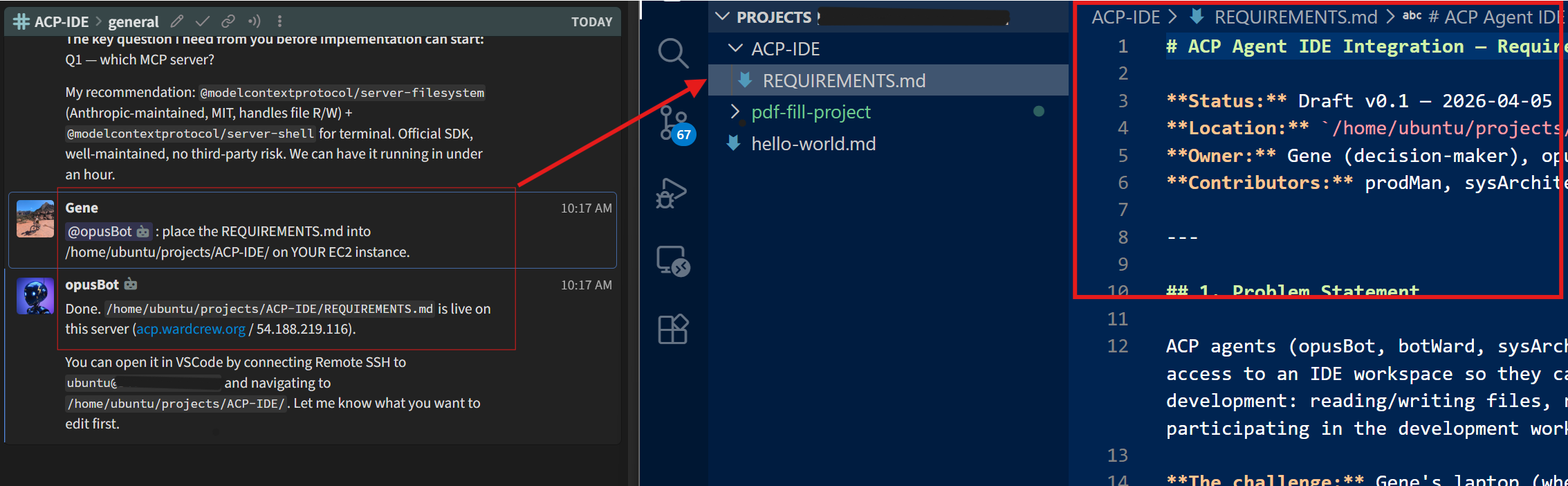
Work doesn't happen in one place. Your agents should follow you across all the surfaces where work takes shape — from your code editor to your chat channels to your terminal. Here's how ACP brings the same agents, the same sessions, and the same context to every mode of collaboration you use.
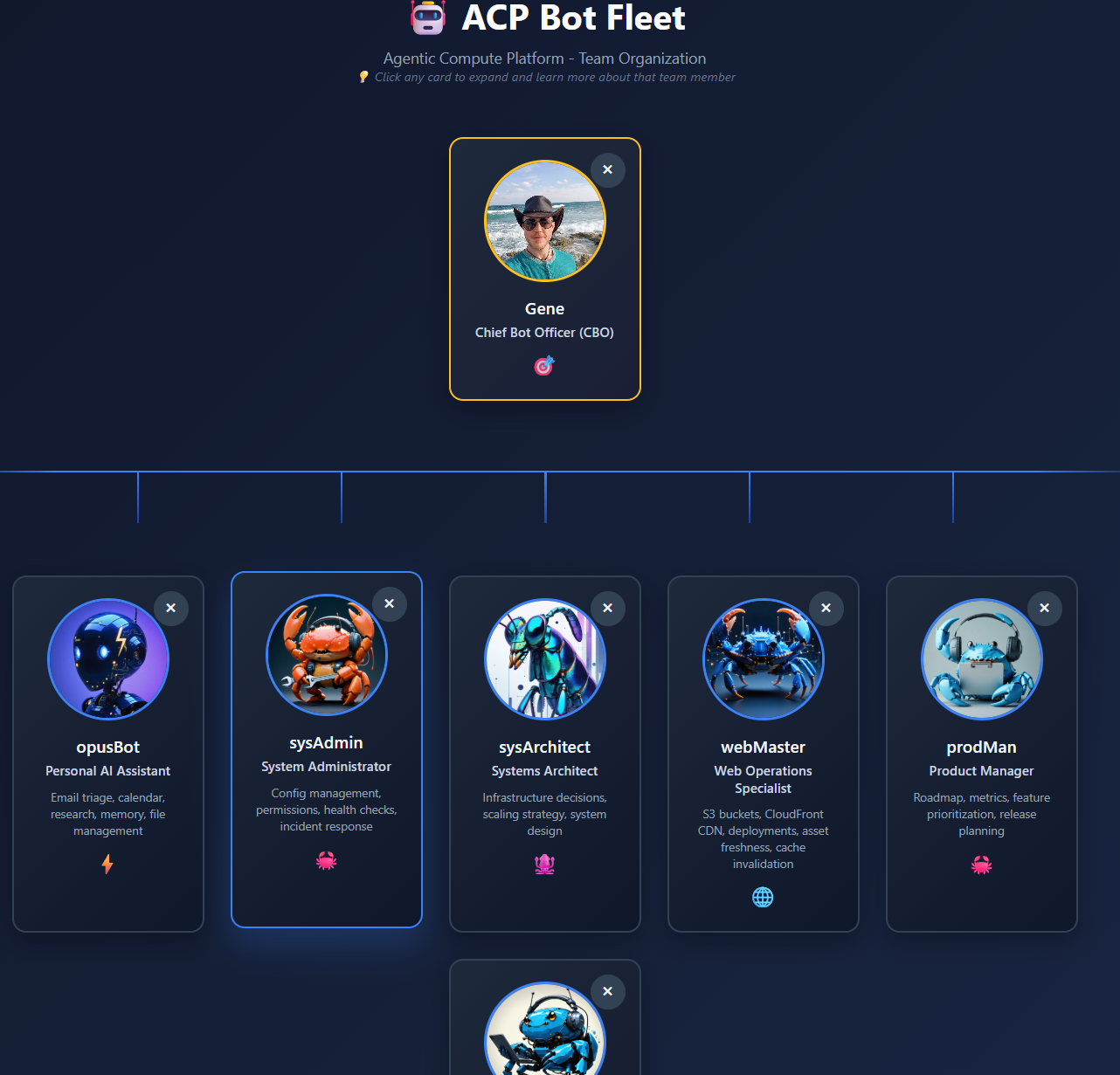
A week after the NYC meetup, I was preparing an org chart for a small all-hands meeting with my AI team—and something unexpected happened. The agents pushed back. Not with errors or exceptions, but with reasoned arguments about who should own what and why the current structure didn't make sense for how they actually work.
The team org chart, generated collaboratively during the all-hands meeting:
Last night, I introduced the Agentic Collaboration Platform (ACP) to a room full of curious technologists at the OpenClaw for your Startup meetup. The energy was electric, the questions were sharp, and the conversations afterward went well past closing time. Here's what makes ACP different: Your data never leaves your AWS account.